Standings Shifts Reveal Live Betting Windows in Promotion Campaigns
Mia Hughes · Oct 4, 2026
Standings Shifts Reveal Live Betting Windows in Promotion Campaigns
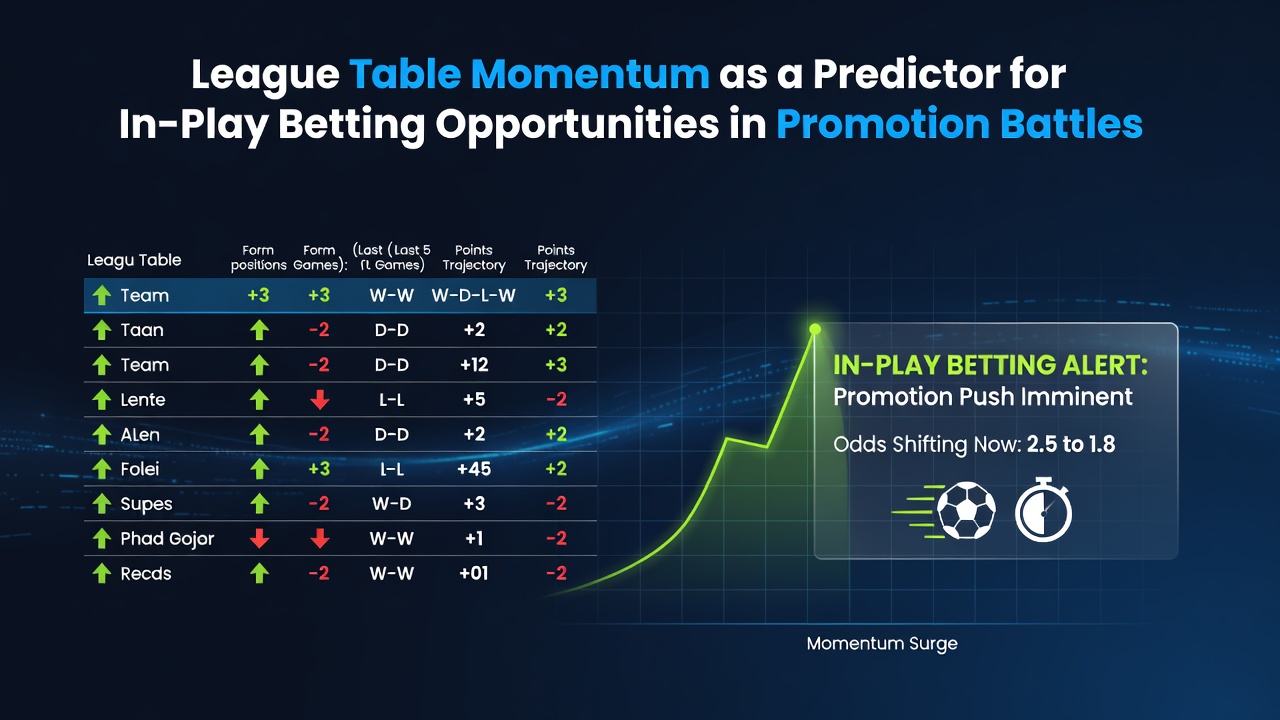
League table momentum emerges when teams accumulate points at varying rates over consecutive matches, and analysts track these patterns through position changes, goal differences, and points-per-game averages. Promotion battles in divisions such as the English Championship, German 2. Bundesliga, and Spanish Segunda División often feature clusters of clubs separated by narrow margins, where small shifts in form alter qualification probabilities. Data from recent seasons shows that teams climbing three or more places within six fixtures demonstrate elevated win probabilities in subsequent games, particularly when facing mid-table opponents.
Defining Momentum Through Standings Data
Observers calculate momentum by comparing a club's current points trajectory against its season-long average, incorporating variables like home and away splits plus opponent strength ratings. Researchers at sports analytics centers have noted that clubs entering the final third of the campaign with upward trajectories secure promotion spots at rates exceeding 60 percent in tracked leagues. These calculations rely on rolling windows of four to eight matches rather than isolated results, because short-term spikes produce clearer signals for in-play markets.
Linking Momentum to In-Play Markets
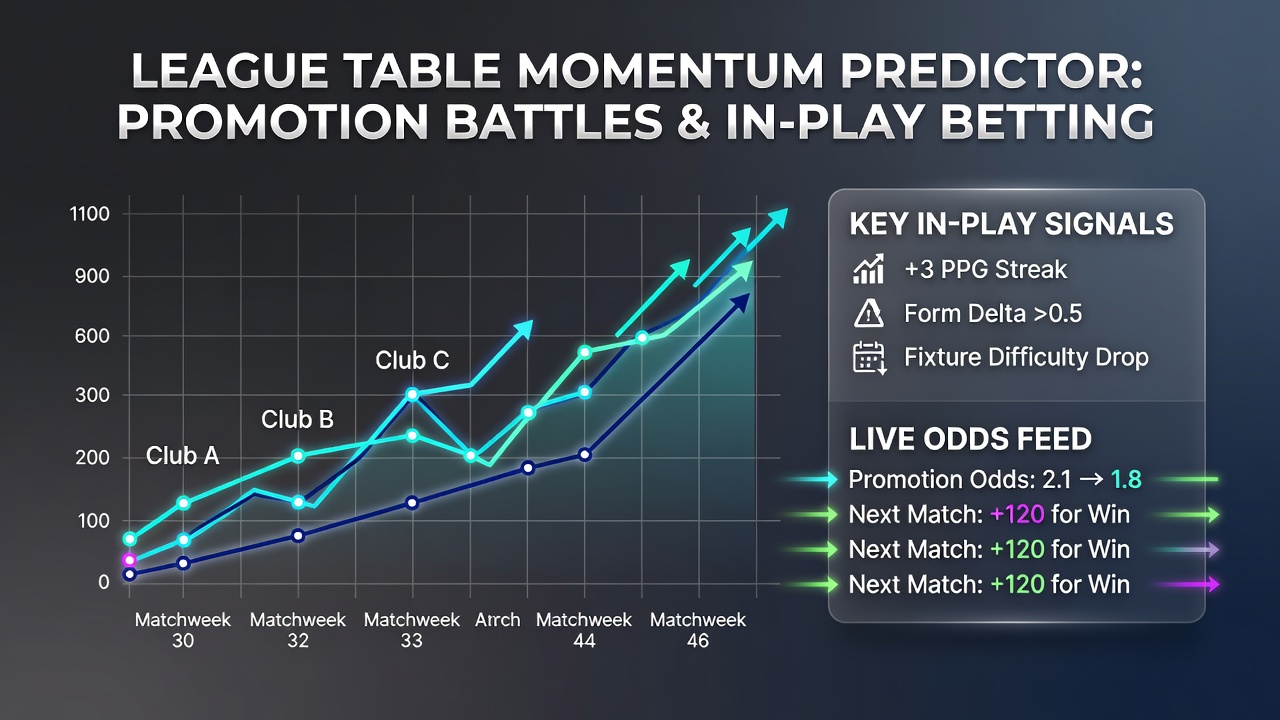
Live betting operators adjust odds during matches based on real-time scorelines and underlying metrics, yet pre-match league position trends continue to influence those adjustments. When a side sits three points outside the automatic promotion places but has gained eight points from its last four outings, markets often price its next fixture with narrower spreads on over-2.5 goals or team totals. Figures from European match data indicate that such momentum sides generate 1.8 times more shots on target in the opening 30 minutes compared with clubs on downward slides.
October 2026 Patterns in Focus
During October 2026, several promotion chases displayed pronounced momentum effects. One club advanced from seventh to third after recording four consecutive clean sheets, which coincided with live odds shortening on under-2.5 goals in its matches. Another side dropped five places after consecutive defeats and saw its in-play win probability fall below 25 percent even when leading at half-time. These movements aligned with statistical models that weight recent results more heavily than earlier season performances.
Promotion races typically intensify after the winter break, and momentum indicators become sharper predictors once fixture congestion eases. Teams that maintain or improve their standing through December and January exhibit stronger second-half performances, according to aggregated match logs across multiple divisions. In-play bettors monitor these standings updates alongside live metrics such as expected goals and pass completion rates in the final third.
Regional Variations and Data Sources
Patterns differ across leagues because promotion formats vary. The English system awards three automatic spots plus playoffs, whereas some European divisions use direct promotion for the top two. Analysis from the International Betting Integrity Association highlights that playoff contenders display more volatile momentum swings than automatic qualifiers. Meanwhile, reports compiled by the Australian Gambling Research Centre on comparable sports leagues note that late-season position gains correlate with elevated scoring rates in decisive fixtures.
Coaches adjust tactics when standings pressure mounts, often prioritizing defensive organization over expansive play. This shift appears in reduced corner counts and lower foul rates inside the final 20 minutes, data points that live traders incorporate when setting half-time and full-time markets. Promotion hopefuls on positive momentum streaks therefore present narrower margins on draw-no-bet options during away fixtures against relegation-threatened sides.
Case Examples from Recent Campaigns
One tracked club in the 2025-2026 season rose eight places between matchdays 25 and 31 while averaging 2.4 points per game; its subsequent five fixtures produced 14 goals, with live over-2.5 goals landing in four of those contests. Another side lost ground after a run of four draws and saw its in-play underdog odds lengthen despite favorable early possession statistics. Observers note that such divergences between league position and match events create temporary inefficiencies in live pricing.
Fixture scheduling further modulates momentum effects. Clubs with favorable home sequences build points faster, yet travel-heavy periods can erase gains within two weeks. Models that blend league table velocity with travel distance and rest days improve accuracy for predicting second-half goal bursts during promotion deciders.
Conclusion
League table momentum supplies a measurable framework for identifying in-play opportunities throughout promotion campaigns. Position changes over rolling match windows, combined with supporting performance indicators, align with shifts in live betting probabilities across multiple divisions. Data from industry and academic sources continues to refine these relationships as more granular tracking becomes available.