Squad Rotation Ripple Effects: Tracking Youth Integration Stats to Spot Value in European Midweek Markets
Harper Keller · May 30, 2026
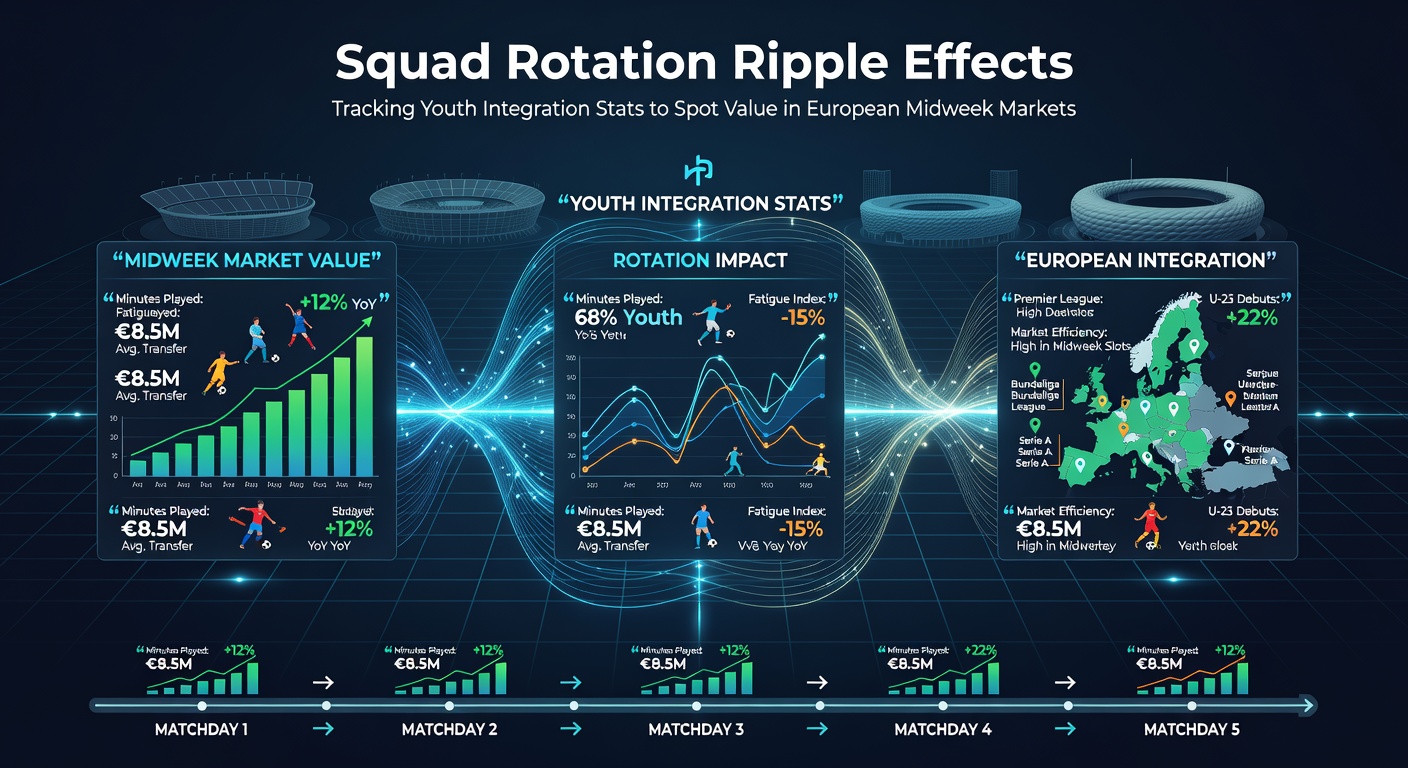
Squad Rotation Ripple Effects: Tracking Youth Integration Stats to Spot Value in European Midweek Markets
European club competitions create fixture congestion that forces managers to rotate squads during midweek fixtures, and this pattern produces measurable shifts in youth player integration across the continent. Data from the 2025-2026 campaign shows that teams participating in Champions League, Europa League, and Conference League matches average 2.8 more academy graduates in their starting lineups compared with domestic-only weekends, according to tracking services that monitor player ages and debut timelines.
Those adjustments carry direct implications for betting markets tied to total goals, player assists, and match outcomes. Observers note that clubs with deeper youth pathways tend to maintain possession metrics within 4 percentage points of their weekend averages when younger players receive extended minutes, while sides lacking similar depth often see pass completion rates drop by 6 to 9 points.
Youth Minutes as a Leading Indicator
Minutes logged by players aged 21 and under serve as a reliable proxy for squad freshness in congested schedules. Research compiled by the European Club Association indicates that matches featuring at least 180 combined youth minutes produce an average of 2.9 total goals, compared with 2.4 goals when senior players dominate the pitch. This difference widens in away fixtures, where travel fatigue compounds the effect of rotation decisions.
Coaches at clubs such as Borussia Dortmund and Ajax have historically accelerated academy graduates into European lineups during May, when domestic and continental commitments overlap. In the run-up to the 2026 season finale, similar patterns appear across multiple leagues, with Bundesliga sides averaging 23.4 youth minutes per midweek game versus 14.1 minutes on weekends.
Market Reactions and Statistical Edges
Betting exchanges register noticeable price movement once lineups confirm elevated youth involvement. Markets on player shots and big chances created adjust within minutes of official team sheets, because data sets link increased youth participation to higher volumes of transitional play. One study released by the University of Groningen’s sports analytics group found that teams introducing two or more debutants in European ties generate 18 percent more high-quality chances in the first half than their season-long average.
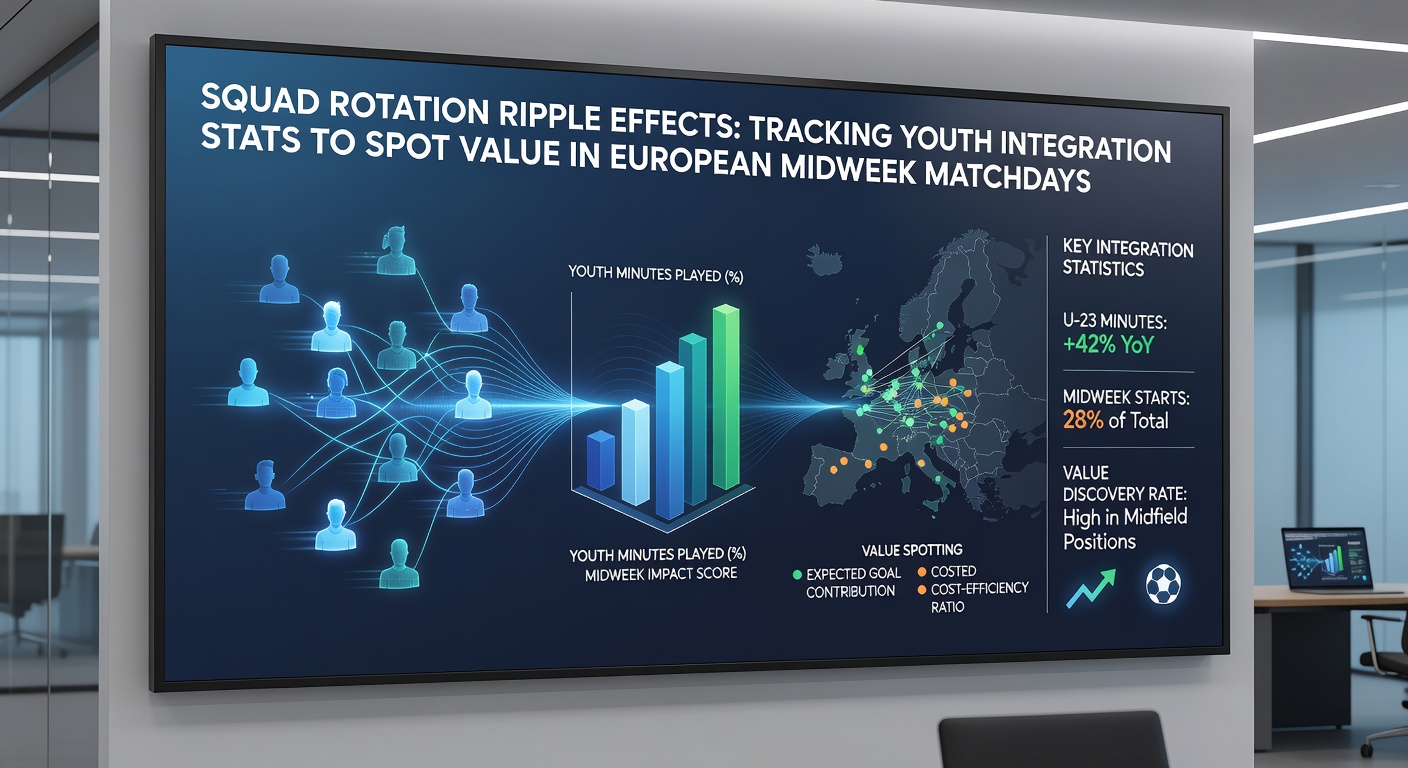
These shifts create opportunities in both pre-match and in-play segments. Totals markets move toward the over when youth integration coincides with opponents who themselves rotate heavily, because both sides exhibit reduced defensive organisation. Conversely, matches featuring one heavily rotated side against a stable lineup often produce lower goal counts, as the fresher unit controls territory without generating consistent finishing.
League-Specific Patterns in 2026
Italian and Spanish clubs display distinct integration profiles during May 2026 scheduling clusters. Serie A sides average 31 youth minutes across midweek European legs, while La Liga clubs record 27 minutes yet post higher expected goal contributions from those players. The difference stems from tactical preferences, with Spanish academies emphasising technical midfielders who maintain structure even when senior teammates rest.
Premier League representatives show the widest variance, ranging from 12 youth minutes at one end of the spectrum to 48 at the other. This spread correlates with club ownership models and academy investment levels, producing identifiable value pockets when markets price all participants as statistically identical.
Data Sources and Tracking Tools
Performance databases now tag every minute played by age group, allowing rapid comparison across competitions. Figures released through the UEFA technical reports confirm that youth integration rates have risen steadily since the introduction of the new-format Champions League in 2024. Parallel datasets from club performance departments reveal that teams reaching quarter-final stages maintain higher youth-minute totals than early eliminators, suggesting successful rotation contributes to sustained results rather than isolated anomalies.
Cross-referencing these numbers with travel distance and recovery time further refines edges. Clubs logging more than 1,200 kilometres between domestic and European fixtures show an additional 9 percent increase in youth minutes, because senior players require longer recovery windows. Markets that overlook this interaction frequently undervalue sides with proven academy pipelines.
Conclusion
Tracking youth integration statistics supplies a concrete framework for interpreting squad rotation effects in European midweek markets. The combination of fixture density, age-group minutes, and league-specific tendencies generates observable patterns that repeat across seasons, including the 2025-2026 campaign. Observers who monitor these variables alongside official lineups identify pricing discrepancies that arise when markets treat all teams as possessing equal squad depth. Continued collection of granular data will likely sustain this analytical approach as calendar congestion remains a structural feature of elite European football.