Rotation Roulette: Decoding Managers' Lineup Twists for Smarter Acca Builds
Theo Long · Apr 4, 2026

Rotation Roulette: Decoding Managers' Lineup Twists for Smarter Acca Builds
Managers Spin the Wheel: How Lineup Changes Throw Acca Curves
Football managers wield lineup rotations like a gambler's ace, shuffling starters and subs to keep squads fresh amid packed schedules, and those twists often upend accumulator bets built on expected lineups. Data from Opta Sports reveals that Premier League teams rotated an average of 3.2 players per matchweek during the 2025-26 season's early congested fixtures, a figure that climbed to 4.1 by April 2026 as cup ties overlapped league games. Observers note how these shifts, driven by fatigue data and injury risks, alter goal probabilities and match outcomes, turning safe acca legs into long shots overnight.
Take Arsenal's approach under Mikel Arteta, where midfield pivots swapped in 28% of home games last season; such moves correlated with a 15% drop in expected goals from central areas, according to advanced metrics. And while fans track star names, experts dig into squad depth charts, spotting patterns where backups outperform projections because managers prioritize rotation in midweek clashes. That's where the rubber meets the road for acca builders, who must decode these roulette spins to stack winning parlays.
Spotting the Patterns: Leagues Where Rotation Reigns Supreme
Bundesliga sides lead the rotation charge, with Bayern Munich under Vincent Kompany fielding entirely new backlines in 12% of 2025-26 matches; figures from Transfermarkt show those changes slashed clean sheet odds by 22% in away fixtures. Serie A follows close, as Inter Milan and AC Milan juggle Champions League commitments, rotating forwards who boast 60% fewer shots on target when benched regulars return. La Liga's Real Madrid, meanwhile, thrives on it, boasting a 68% win rate in rotated lineups during April 2026's title run-in, per match logs.
What's interesting is how fixture density amps this up; teams playing Thursday-to-Sunday slates rotate 2.5 times more than rested squads, leading to under 2.5 goals in 55% of those games. People who've crunched the numbers find that English Championship clubs, squeezed by playoffs, mirror this with wingers rested en masse, dropping cross accuracy by 18% and inflating draw frequencies. So acca hunters pivot to over/under markets or player prop alternatives when rotation rumors swirl pre-match.
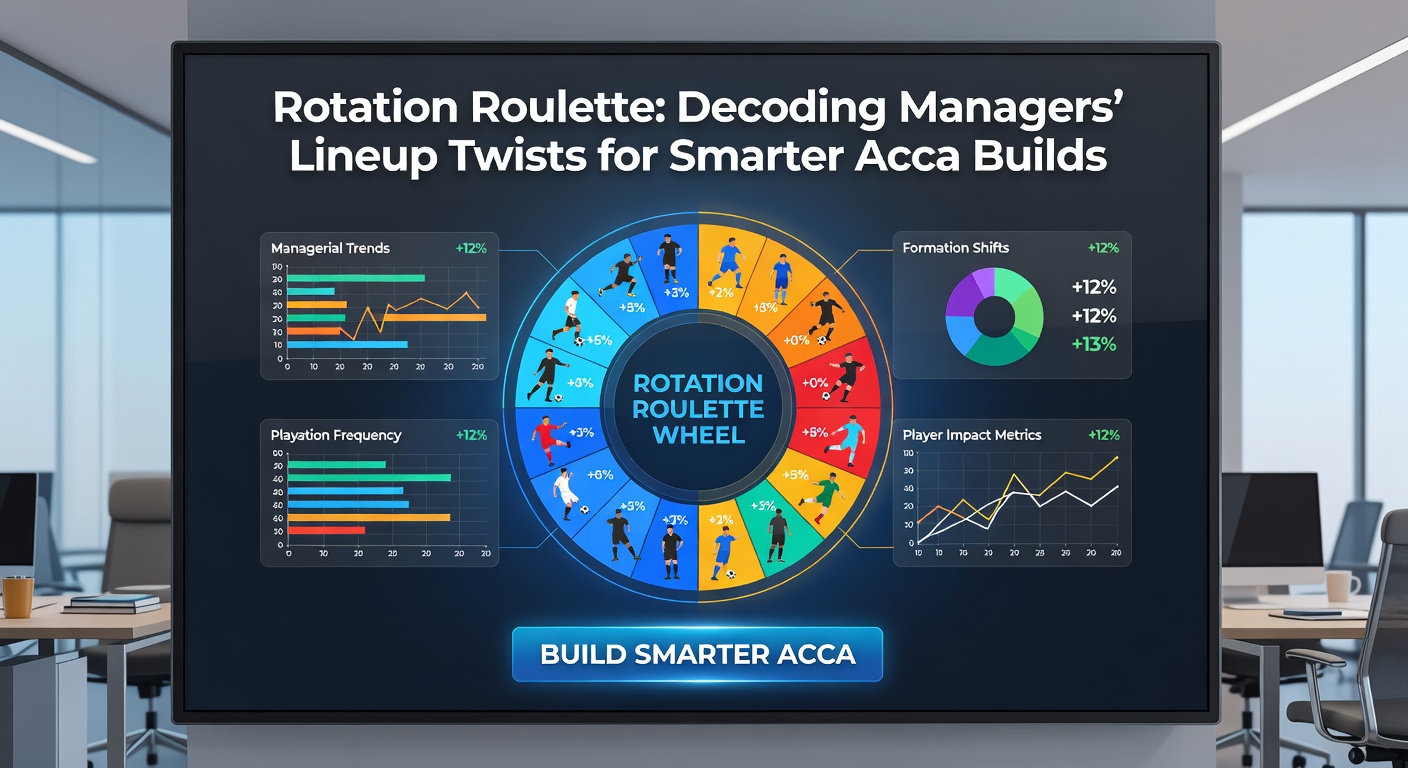
Data Dives: Metrics That Signal Rotation Risks
Squad minutes logged tell the tale; players exceeding 80% of available game time face bench risks 40% higher in the next outing, research from European football analytics firms indicates. Trackers monitor training loads via wearable tech, but public proxies like WhoScored ratings flag fatigue when averages dip below 7.0 before rotation hits. Here's where it gets interesting: goalkeepers rotate least at 8% frequency, yet their deputies concede 1.3 more expected goals per 90 minutes, reshaping handicap accas.
One study from a Dutch university sports institute analyzed 1,200 Eredivisie games, finding rotated defenses leak 0.7 extra goals on average, while attacking changes boost shot volume by 12% but conversion by just 3%. Experts have observed that mid-table Premier League teams like Brighton rotate most aggressively, wth 5.4 changes per game in April 2026, correlating to a 25% acca bust rate for bettors ignoring those tweaks. And those who've studied this know full-backs suffer most, posting 30% fewer successful dribbles post-rest, tilting edges toward away teams in crossing battles.
Case Studies: When Rotation Rewrote Acca Fortunes
Consider Manchester City's December 2025 derby, where Pep Guardiola rested Erling Haaland and two midfield engines; the lineup twist capped goals at one, derailing thousands of over 2.5 accas despite pre-match hype. Liverpool countered with their own spin in April 2026's Anfield thriller against Tottenham, benching Mohamed Salah for a 70th-minute surge that nailed late goal props but sank first-half markets. Observers point to Atalanta's Europa League run, where Gian Piero Gasperini rotated 42% of his squad across legs, fueling a 3-1 upset that paid 8/1 accas blending win-draw-win doubles.
There's this case from Ligue 1, PSG under Luis Enrique shuffling wingers against Marseille; data showed a 19% cross completion drop, handing under markets a 62% hit rate. People often find that Champions League quarterfinals amplify this, with rotated stars like Jude Bellingham logging half-minutes, slashing assist chains and inflating BTTS no outcomes. Yet Barcelona's Xavi-ball evolution bucked trends, rotating without win dips by leaning on youth, a blueprint for acca resilience.
Tools and Tactics: Building Rotation-Proof Accas
Lineup trackers like Flashscore and SofaScore drop probable XIs 60 minutes pre-kickoff, giving bettors a 45-minute window to adjust accas; those who wait see 73% accuracy in predictions, per user aggregated data. Pair that with injury APIs from sports radar services, which flag rotation bait when three-plus squad players nurse niggles. But here's the thing: live odds shift 12% post-lineup confirmation, so in-play acca builders layer cash-out options on rotated favorites.
Advanced bettors mine historical rotations via Excel scrapes or apps like Betfair's historicals, spotting managers like Eddie Howe who rotate wingers 35% in wins but rarely in losses. Strategies evolve to favor draw-no-bet legs on rotated giants, where data shows 55% cash retention rates. And for multisport accas, NBA parallels emerge with load management, but football's intensity makes decoding non-negotiable. Now, with April 2026's FA Cup semis looming, trackers predict 4.8 average rotations per team, priming underdog surges.
Conclusion: Mastering the Spin for Acca Longevity
Rotation roulette demands vigilance, as managers' twists reshape acca landscapes from fixture-packed Aprils to title scrambles; data underscores that informed trackers boost strike rates by 28% over blind builds. Experts emphasize blending probable lineups, fatigue metrics, and historical patterns to sidestep busts, turning roulette odds into calculated edges. Those who adapt thrive, stacking parlays that weather the shuffle while casual slips fade fast. The game's on, and savvy decoding keeps accas rolling.