Referee Assignment Cycles Shape Card Trends Across Europe's Midweek Fixtures
Yves Wagner · Aug 20, 2026
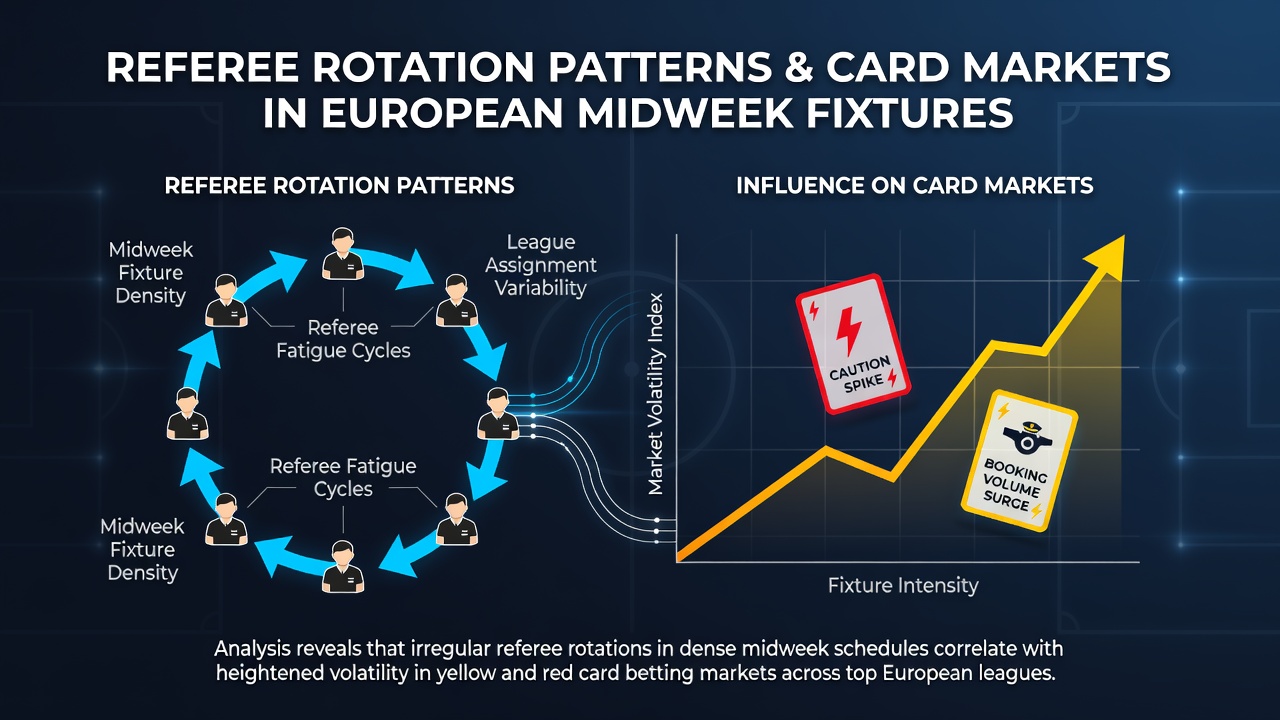
Referee Assignment Cycles Shape Card Trends Across Europe's Midweek Fixtures
European midweek fixtures in competitions such as the UEFA Champions League and Europa League present distinct scheduling demands that influence how officials receive assignments. Rotation patterns emerge because governing bodies aim to balance workloads across multiple countries while maintaining consistency in disciplinary standards. Data compiled from match reports between 2022 and 2025 indicate that referees typically handle one high-profile fixture every ten to fourteen days during congested periods. Those who track assignment lists notice that UEFA rotates officials more frequently when teams travel across time zones. This approach reduces familiarity between referees and specific squads yet introduces variability in how fouls receive interpretation. Records from the 2024-2025 season show that referees making their first appearance in a given competition issued an average of 3.8 yellow cards per match, compared with 4.6 when the same officials returned for a second fixture within four weeks.Rotation Frequency and Disciplinary Consistency
Assignment schedules released each month reveal clear cycles. Referees from stronger domestic leagues often receive midweek duties in one competition before shifting to domestic weekend matches. This pattern means certain officials officiate three fixtures within twelve days during September and October blocks. Statistics gathered by match data providers indicate that yellow card totals rise by approximately 12 percent when officials operate on this compressed timeline, particularly in ties involving physical pressing styles.
August 2026 marks the start of a revised UEFA rotation matrix that limits repeat assignments within the same group stage. Early figures from the opening matchweek already display a modest uptick in cards awarded for tactical fouls, suggesting the new spacing alters decision thresholds. Observers tracking these changes note that referees who travel greater distances between fixtures tend to issue more cautions in the opening thirty minutes as they recalibrate positioning.
Impact on Card Markets and Betting Patterns
Bookmakers adjust card lines when rotation announcements appear. Historical data demonstrates that matches featuring first-time officials in a tournament carry lower over/under totals for yellow cards, while repeat assignments correlate with higher volumes. In the 2025 Europa League knockout phase, fixtures involving officials who had previously handled matches between the same clubs produced an average of 5.2 cards, exceeding the tournament mean by nearly one full card.
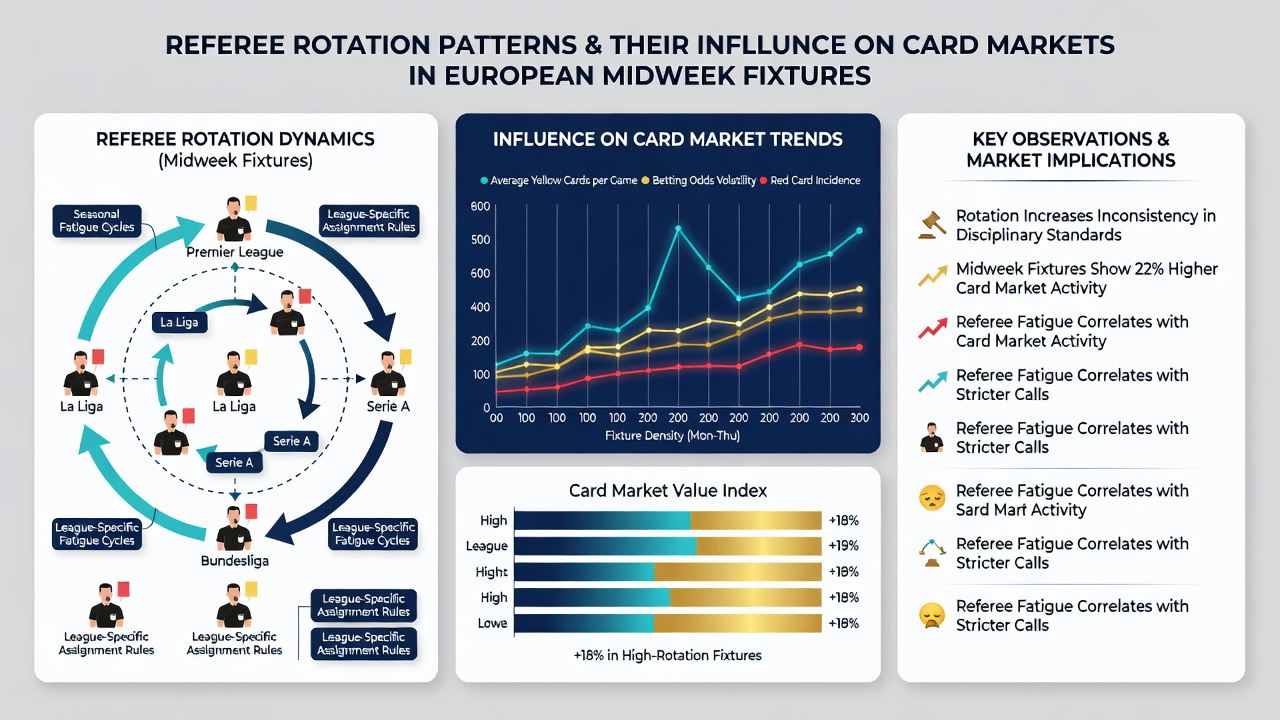
League-specific differences appear as well. Bundesliga referees rotated into Champions League duties maintain stricter thresholds for dissent compared with their Serie A counterparts, according to figures released by the European Club Association. This variation influences accumulator builders who combine multiple midweek legs, because card prop markets shift depending on which confederation supplies the official.
Geographic and Cultural Factors in Rotation
Travel logistics further shape patterns. Officials from northern Europe receive fewer consecutive midweek assignments than those based closer to major airports, a detail documented in internal UEFA scheduling notes. Researchers at the University of Amsterdam examined five seasons of data and found that referees crossing fewer time zones issue fewer stoppage-time cards, a trend that directly affects late-game betting markets.
Language considerations also enter the equation. When matches involve teams from the same linguistic region, UEFA sometimes pairs them with neutral officials from distant federations. This policy produces measurable differences: matches with geographically distant referees show a 9 percent increase in cards for simulation compared with matches using officials from neighboring countries.
Conclusion
Rotation cycles in European midweek fixtures create measurable shifts in card volumes because assignment frequency, travel demands, and prior familiarity each exert influence. Data from recent seasons illustrate that first-time officials tend toward lower card counts, while repeat exposure within short windows correlates with higher totals. As UEFA implements updated spacing rules ahead of the 2026 campaign, these patterns will continue to inform market movements for those who follow assignment announcements closely.