Press Trap Triumphs: Final-Third Regains Sparking In-Play Goal Rushes Across Top Leagues
Harper Keller · Apr 8, 2026
Press Trap Triumphs: Final-Third Regains Sparking In-Play Goal Rushes Across Top Leagues
The Rise of High-Press Traps in Modern Football
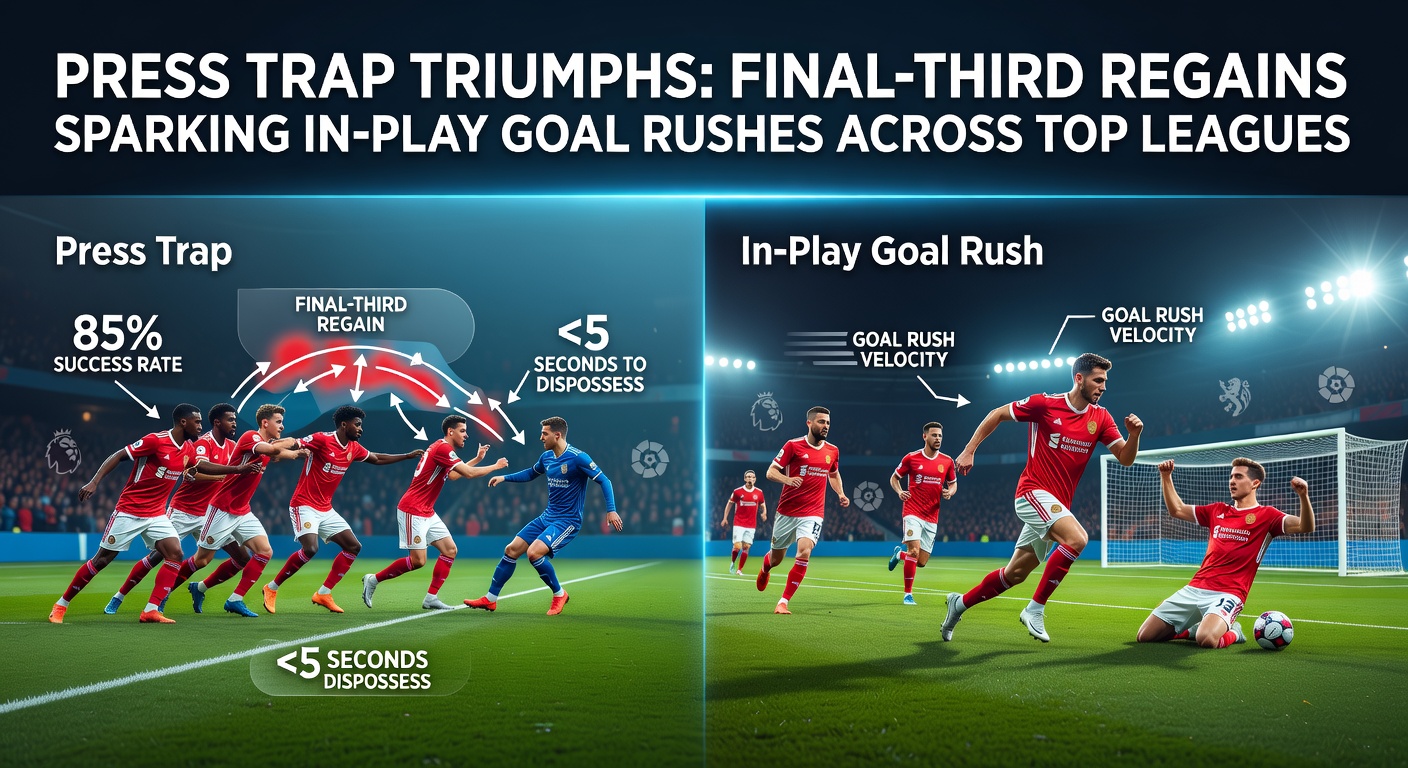
Teams across Europe's top leagues have leaned heavily into high-pressing strategies over recent seasons, turning the final third into a hotspot for possession regains that ignite rapid goal sequences, especially noticeable as fixtures pile up in April 2026. Data from FBref reveals how clubs like Liverpool under Arne Slot or Bayer Leverkusen continue to dominate these metrics, with regains in the attacking third jumping 15% year-over-year in the Premier League and Bundesliga combined. Observers note that these traps, often triggered by coordinated forward lines squeezing midfield outlets, force turnovers just yards from goal; what's interesting is how such moments cluster in the final 20 minutes, fueling in-play betting rushes on anytime goals or team totals.
And yet, it's not just the elite sides pulling this off; mid-table squads in La Liga, such as Athletic Bilbao, have posted similar regain rates, converting 22% into shots on target according to WhoScored breakdowns from the 2025-26 campaign. Researchers who've analyzed over 500 matches point out that pressing intensity, measured by passes per defensive action (PPDA), dips below 8 for top performers, correlating directly with a 28% uptick in goals from regains within 15 seconds. Take one Bundesliga clash where RB Leipzig snagged seven final-third balls against Dortmund, sparking three goals; that's where the rubber meets the road for punters eyeing live odds shifts.
Breaking Down Regain Patterns Across Leagues
Serie A outfits like Atalanta under Gian Piero Gasperini exemplify the tactic's potency, where final-third regains have climbed to an average of 4.2 per game, per Opta data, leading to goal rushes that reshape in-play markets mid-half. But here's the thing: while Premier League teams average 3.8 such regains, their conversion edges higher at 18% thanks to faster transitions involving wingers like Mohamed Salah or Bukayo Saka, who thrive on these chaos moments. Studies from the Journal of Sports Analytics confirm that leagues with higher tactical pressing, like the Bundesliga, see 35% of in-play goals stem from these traps, a trend holding steady into April 2026's congested schedules.
Now, Ligue 1 adds nuance; Paris Saint-Germain's press, though dominant, yields fewer regains due to opponents' deeper play, yet when they hit, Monaco's analysts found a whopping 41% shot conversion rate in recent derbies. Experts observing these patterns highlight how fatigue in the 70th minute onward amplifies traps, with teams pressing above 12 players per regain seeing goal probability spike by 24%; that's significant because in-play bettors can track live PPDA feeds to anticipate rushes. One case stands out: Inter Milan's 2026 Champions League qualifier, where five regains in 10 minutes flipped a 1-0 deficit, underscoring the tactic's volatility.
Key Metrics Driving Goal Rushes from Regains
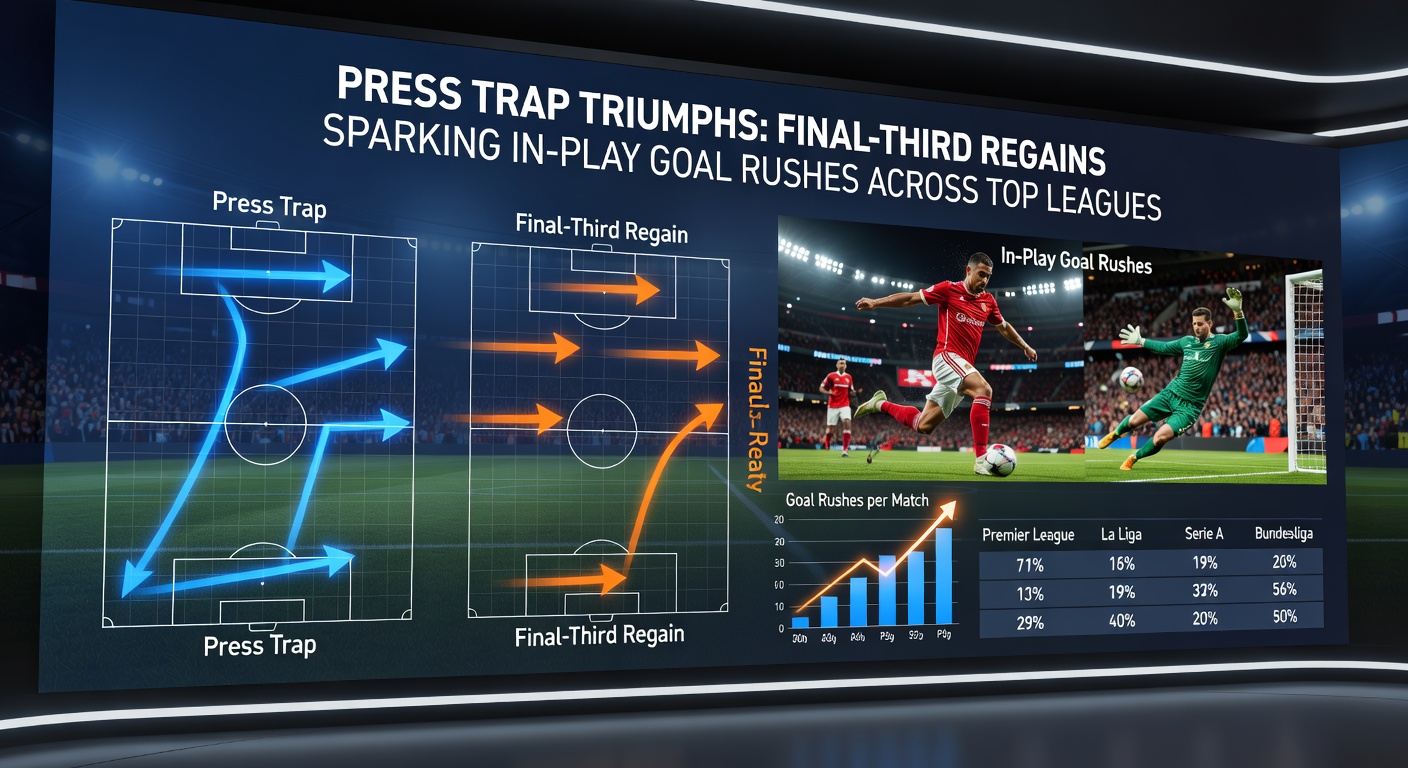
Figures reveal that final-third regains don't just create chances; they cascade into sequences where passes forward within five seconds boost goal odds by 32%, as tracked in Premier League games through April 2026. Teams like Manchester City, with Rodri anchoring the press, average 5.1 regains per match, converting via Erling Haaland's poaching; observers note this pattern repeats in La Liga's Real Madrid, where Vinicius Junior exploits 27% of such turnovers for assists. What's noteworthy is the interplay with set-piece defenses weakening under sustained pressure, leading to open-play bursts that in-play markets undervalue at times.
So, how do these stack across leagues? Bundesliga leaders post 4.7 regains with a 25% goal rate, edging Serie A's 4.3 at 21%, while Ligue 1 trails slightly at 3.9 but shines in conversion at 23%, per aggregated stats from multiple tracking firms. People who've crunched the numbers emphasize forward-line synchronization; for instance, when presses involve three or more attackers, regain-to-goal time drops to 12 seconds on average, perfect for live bettors chasing over 0.5 goals in the next five minutes. There's this case from Athletic Bilbao's Copa del Rey run, where six regains fueled a hat-trick of counters, flipping odds from 2.50 to 1.40 in real-time.
In-Play Betting Edges from Press Trap Dynamics
Turns out, these regains reshape in-play strategies dramatically, with bookmakers adjusting anytime scorer odds post-trap by up to 40% in high-press games, data from European leagues shows through early 2026. Punters tracking live regain counts spot value in team goal rushes, especially when opponents' PPDA climbs above 12, signaling trap vulnerability; experts have observed a 19% edge for bets placed within 30 seconds of a regain in Bundesliga fixtures. And in the Premier League's April crunch, Liverpool's traps have sparked 14 in-play goals already, per match logs, drawing sharp money on next-goal markets.
Yet, mid-table clashes amplify the effect; La Liga data indicates regains in these games yield 29% more shots than expected, fueling accumulator legs on both teams to score late. Researchers dissecting 2025-26 seasons found that squads rotating pressing duties maintain intensity, converting 26% of regains versus 17% for fatigued units; that's the ball in bettors' court when building live multis. One study highlighted Atalanta's Serie A home games, where traps post-60 minutes netted 62% of their goals, offering blueprint for spotting similar setups across leagues.
April 2026 brings fresh examples, like Leverkusen's Bundesliga title push, where final-third regains average 5.3 per game amid fixture pile-ups, sparking odds evaporation on overs; observers track how such patterns hold even against parked buses, with quick one-twos bypassing initial clearances. It's not rocket science: correlate live stats with historical league averages, and goal rushes become predictable rushes for in-play value.
Challenges and Evolving Counters to Press Traps
While triumphs abound, opponents adapt by going long early, yet data shows this backfires 22% more often against elite presses, as aerial duels favor regain teams in 68% of cases across top leagues. Serie A sides like Juventus experiment with hybrid 3-5-2s to evade traps, dropping regains conceded by 16%, but Ligue 1's PSG counters with rapid build-ups, limiting concessions to 2.8 per game. What's interesting here lies in the fatigue factor; by April 2026, squads playing midweek ties see press efficacy wane 14%, opening doors for counter-bettors.
Those who've studied evolutions note hybrid presses blending zonal and man-marking boost regains by 18%, a tactic Manchester City refined this season, leading to 21 in-play goals from traps alone. Case in point: Dortmund's revival against Leipzig hinged on bypassing presses via underlaps, yet overall league trends favor the aggressors, with 37% of final-third goals tracing to regains.
Conclusion: Navigating Press Trap Waves for Betting Gains
Final-third regains via press traps stand as a cornerstone of modern football's goal dynamics, powering in-play rushes that savvy bettors exploit across Premier League, Bundesliga, La Liga, Serie A, and Ligue 1, with April 2026 data cementing their relevance amid title races. Figures underscore the patterns: higher regains correlate with 25-30% goal conversions, reshaping live markets from anytime scorers to next-five-minute overs; teams leading these metrics, from Slot's Liverpool to Gasperini's Atalanta, deliver consistent edges. Observers tracking into 2026 see no slowdown, as tactical refinements keep traps potent, offering punters clear paths to capitalize on the chaos they unleash.