Pitch Degradation Patterns Shape Goal Line Adjustments in Midweek League Games
Theo Long · Aug 27, 2026
Pitch Degradation Patterns Shape Goal Line Adjustments in Midweek League Games
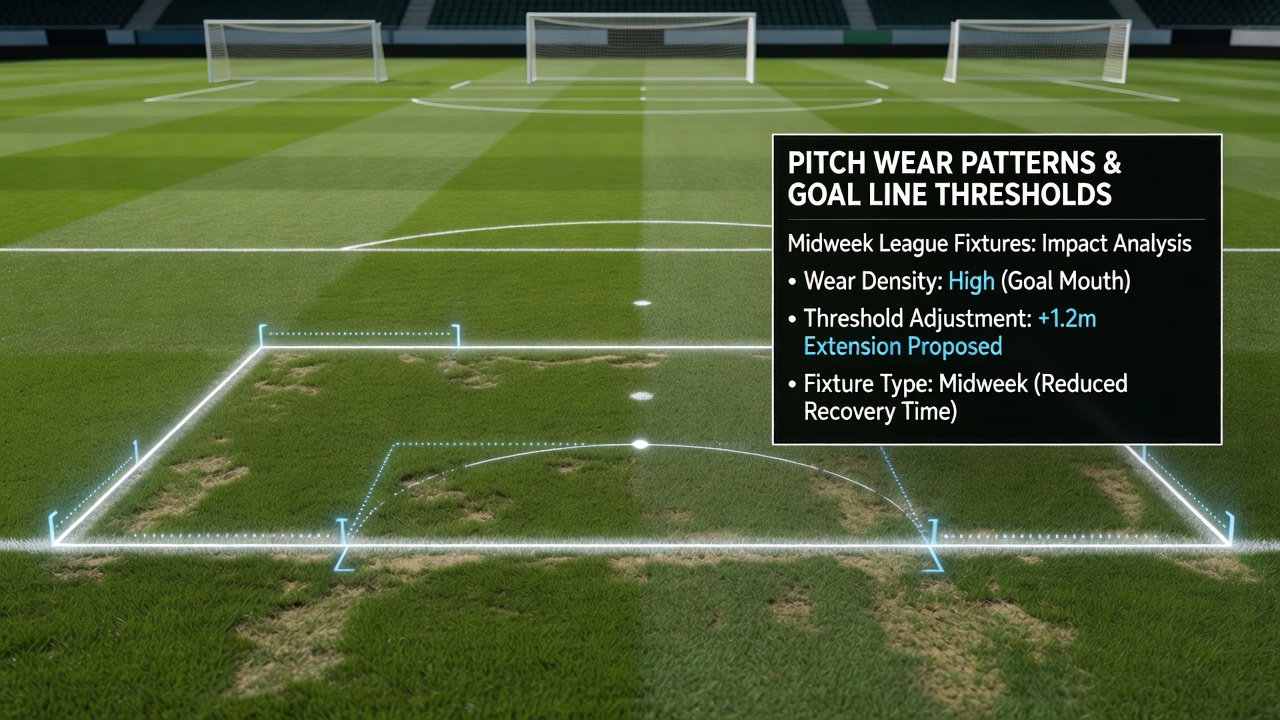
Football pitches endure repeated stress during congested schedules, and midweek league fixtures often accelerate wear in specific zones that directly influence ball behavior and scoring potential. Data from European domestic competitions shows that central and goal-mouth areas lose grass coverage at higher rates when teams play three matches in eight days, which alters the surface speed and bounce characteristics that bookmakers factor into goal line thresholds.
Development of Wear Patterns Under Fixture Pressure
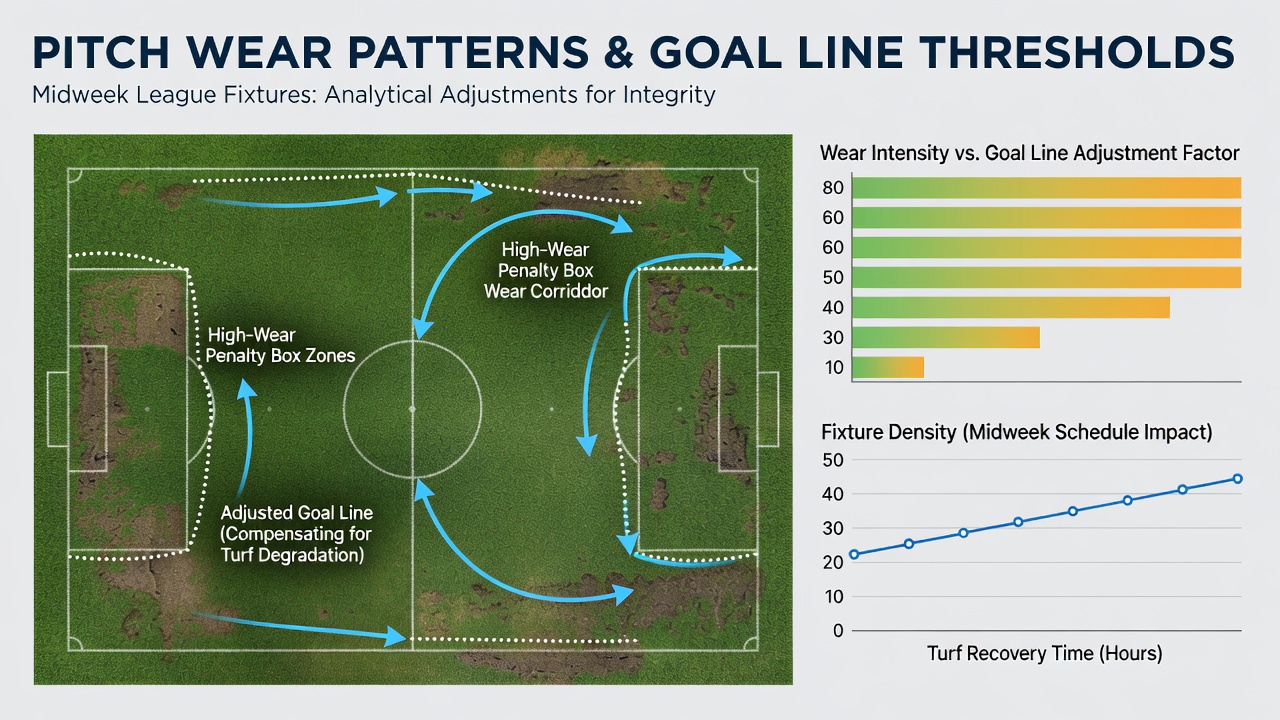
Heavy usage concentrates damage around the penalty boxes and center circle, where players pivot and slide most frequently. Researchers tracking Bundesliga and Serie A surfaces across the 2025-2026 campaign noted that bare patches exceeding 15 percent of the goal area correlate with reduced through-ball accuracy and fewer low-driven crosses reaching their target. These physical changes emerge faster on natural grass pitches maintained under older irrigation standards, while hybrid surfaces delay the same level of degradation by roughly two additional matches.
Weather compounds the issue. August 2026 fixtures across northern Europe encountered prolonged dry spells that hardened exposed soil, creating unpredictable skids when the ball crossed worn channels. League analysts recorded a measurable drop in expected goals from set pieces on these surfaces, prompting operators to recalibrate pre-match goal line offerings downward by 0.25 goals in several affected venues.
Gameplay Shifts and Scoring Dynamics
Players adapt their movement on degraded turf by shortening strides and favoring lofted passes, which reduces the tempo of attacks and limits high-percentage shooting opportunities. Studies compiled by sports science teams at universities in Germany and the Netherlands indicate that teams facing such conditions complete 12 percent fewer progressive carries into the final third compared with fresh pitches. The resulting slowdown favors defensive organization, and historical match logs confirm fewer total goals when both sides encounter similar wear after midweek travel.
Goalkeepers also encounter altered rebound angles off patchy ground, leading to more parried shots that stay closer to the box rather than clearing to the flanks. This pattern appears consistently in post-match video reviews from the 2025-26 season, where second-ball recoveries increased by 8 percent on worn surfaces and contributed to extended attacking sequences that still produced fewer clear chances.
Threshold Recalibration in Betting Markets
Market makers monitor pitch reports released 48 hours before kickoff and apply downward adjustments to goal line thresholds when central wear exceeds established benchmarks. Figures from the 2025-26 midweek rounds demonstrate that lines moved an average of 0.35 goals lower on pitches rated below standard by grounds staff, particularly in matches involving teams ranked outside the top six. These shifts reflect observed reductions in open-play goals rather than any change in team intent.
Accumulators built around over-2.5 goals suffer when multiple legs involve worn surfaces, because the combined probability of higher scoring drops measurably. Operators therefore publish revised totals that align more closely with the expected output under documented turf conditions, and data aggregators have begun publishing pitch-wear indices alongside traditional form tables.
Regional Variations and Maintenance Responses
Leagues in southern Europe maintain pitches more effectively during summer months because of milder temperatures, whereas northern venues experience quicker deterioration once autumn rains begin. UEFA technical guidelines recommend aeration cycles and targeted reseeding between midweek rounds, yet clubs with smaller budgets often delay these interventions, leaving surfaces vulnerable during August and September double-headers.
One study conducted across Scandinavian leagues found that hybrid-turf installations reduced goal line variability by 22 percent compared with traditional grass, because the reinforced root structure preserved bounce consistency even after three matches in seven days. Clubs adopting these surfaces reported fewer in-season line movements once the technology became standard in top-flight venues.
Conclusion
Pitch wear patterns supply measurable data that informs goal line threshold adjustments for midweek league fixtures. Observers tracking surface conditions, player adaptations, and historical scoring trends continue to refine models that link turf degradation directly to expected goal totals, and these refinements appear in market offerings across major European competitions. Continued investment in hybrid surfaces and maintenance protocols offers one route to stabilizing both gameplay and the statistical baselines used for threshold setting.