Pitch Condition Reports Alter Over Markets in Rainy European Football Seasons
Mia Hughes · Jun 25, 2026
Pitch Condition Reports Alter Over Markets in Rainy European Football Seasons
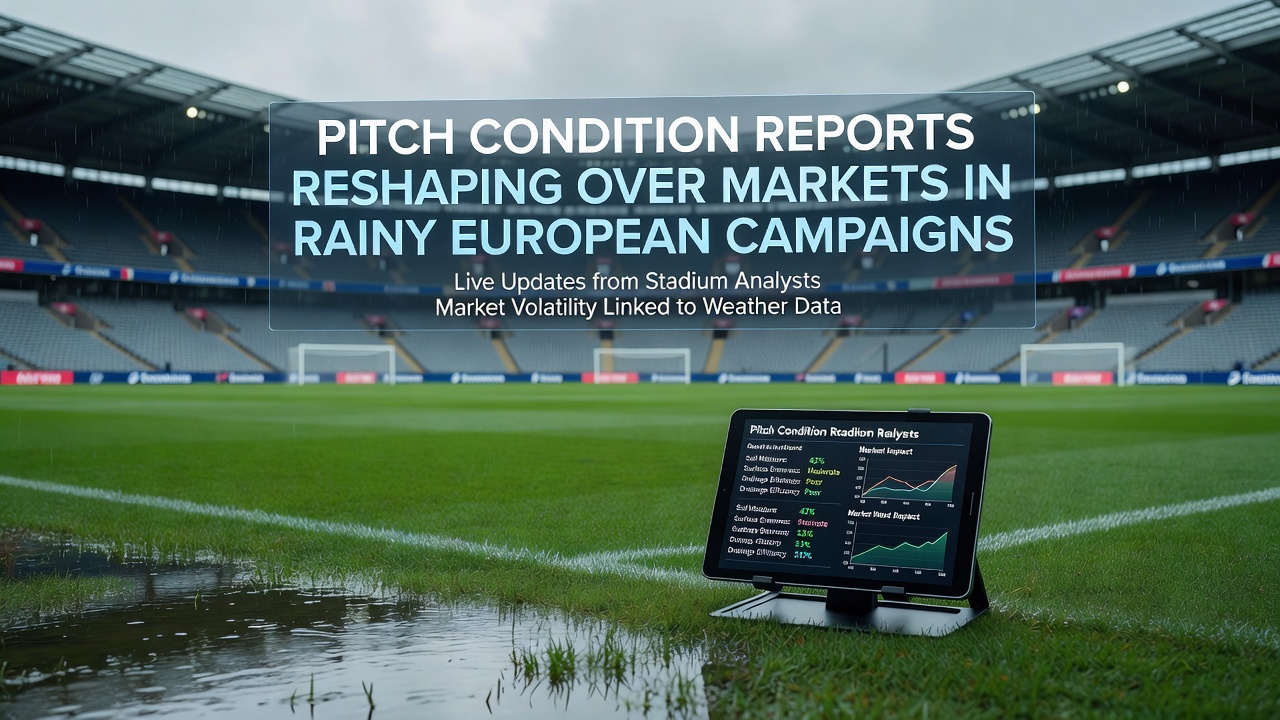
Pitch condition reports now feed directly into over and under market adjustments across several European leagues when persistent rain arrives, and analysts track how groundskeepers' assessments combine with weather data to shift betting lines before kickoff. Data from multiple campaigns shows that saturated surfaces reduce ball speed and passing accuracy, which often leads to fewer goals in the opening half, and this pattern repeats in fixtures across the Bundesliga, Serie A, and Ligue 1 during autumn and winter months. Observers note that when reports flag standing water or heavy thatch, bookmakers respond by nudging totals downward within minutes of publication, and traders who monitor these updates gain an edge by acting before the market fully absorbs the information.
Weather Patterns and Surface Changes
European autumn rainfall frequently leaves pitches waterlogged, and grounds staff measure moisture levels using portable probes that record penetration depth and drainage rates, while league officials compile these readings into standardized reports released two hours before scheduled starts. Research from the European Centre for Medium-Range Weather Forecasts indicates that prolonged precipitation above 15 millimeters per hour correlates with a measurable drop in average goals per game, and teams in the Eredivisie and Primeira Liga exhibit similar trends when away sides face unfamiliar turf conditions. Those who've studied this data know that clay-heavy soils retain water longer than sandy mixes, which creates slower roll and limits through-ball opportunities, and this effect compounds when temperatures stay below 10 degrees Celsius.
Market Adjustments and Timing
Over markets react fastest to late updates because totals rely on expected goal volume, and sharp bettors scan reports for keywords such as "waterlogged" or "slow draining" that signal reduced scoring potential. Figures from several operators reveal that lines move an average of 0.25 goals lower within 30 minutes of a negative pitch assessment, whereas positive drainage news can push totals upward when the surface firms after a dry spell. What's interesting is how in-play trading accelerates once the first 15 minutes confirm the pre-match forecast, and live odds then incorporate actual ball behavior rather than relying solely on historical averages. One study revealed that matches flagged as heavy-pitch encounters produce 18 percent fewer shots on target in the first half compared with dry-weather counterparts, which gives accumulators built around overs an early disadvantage if the report arrives late.

League-Specific Responses
Different competitions handle pitch reporting with varying degrees of detail, and the Bundesliga publishes moisture readings alongside expected playing time before each matchday, whereas Serie A groundskeepers focus on grass length and root stability that influence long-ball effectiveness. Data shows that teams accustomed to high-pressing styles suffer larger goal reductions on saturated surfaces, and this pattern appears consistently in fixtures scheduled after midweek European ties when recovery time is limited. Those who've tracked multiple seasons observe that June 2026 pre-season friendlies already incorporate similar reporting protocols in northern Europe, where unseasonal rain has prompted early testing of new drainage systems at several top-division venues.
Betting Strategies and Data Integration
Professional syndicates now integrate pitch reports with player tracking metrics such as expected pass completion rates under wet conditions, and models adjust projected goal totals before lines open. According to industry reports from the European Gaming and Betting Association, operators that incorporate real-time surface data see reduced liability on totals markets because customer bets align more closely with actual outcomes. Yet the ball's in their court when reports arrive after markets have already settled, forcing traders to manage exposure through in-play hedging rather than pre-match adjustments. Take one analyst who noticed that Serie A sides averaging over 2.8 expected goals on dry pitches drop below 2.4 when moisture readings exceed 25 percent saturation, and this gap widens further in evening fixtures where floodlights add surface glare.
Future Developments
Clubs continue to invest in hybrid grass systems that drain faster during heavy rain, and several venues in the Netherlands and Belgium have installed sensor arrays that transmit live moisture data to league headquarters. Research indicates these upgrades reduce the frequency of postponed matches while also stabilizing goal averages closer to seasonal norms. Observers note that as more leagues adopt standardized reporting formats, over market volatility tied to weather may decrease, although regional variations in soil composition will still produce localized effects that require case-by-case analysis.
Conclusion
Pitch condition reports have become a standard input for totals markets in rainy European campaigns, and the combination of groundskeeper assessments, weather forecasts, and historical goal data creates clearer signals for market movement. Teams, analysts, and operators all respond to these updates with measurable shifts in expected outcomes, and the pattern shows no sign of reversing as drainage technology and reporting standards continue to advance across the continent.