Forward Progression Metrics: Refining Live Wagers in Cup Knockouts
Theo Long · Jul 11, 2026
Forward Progression Metrics: Refining Live Wagers in Cup Knockouts
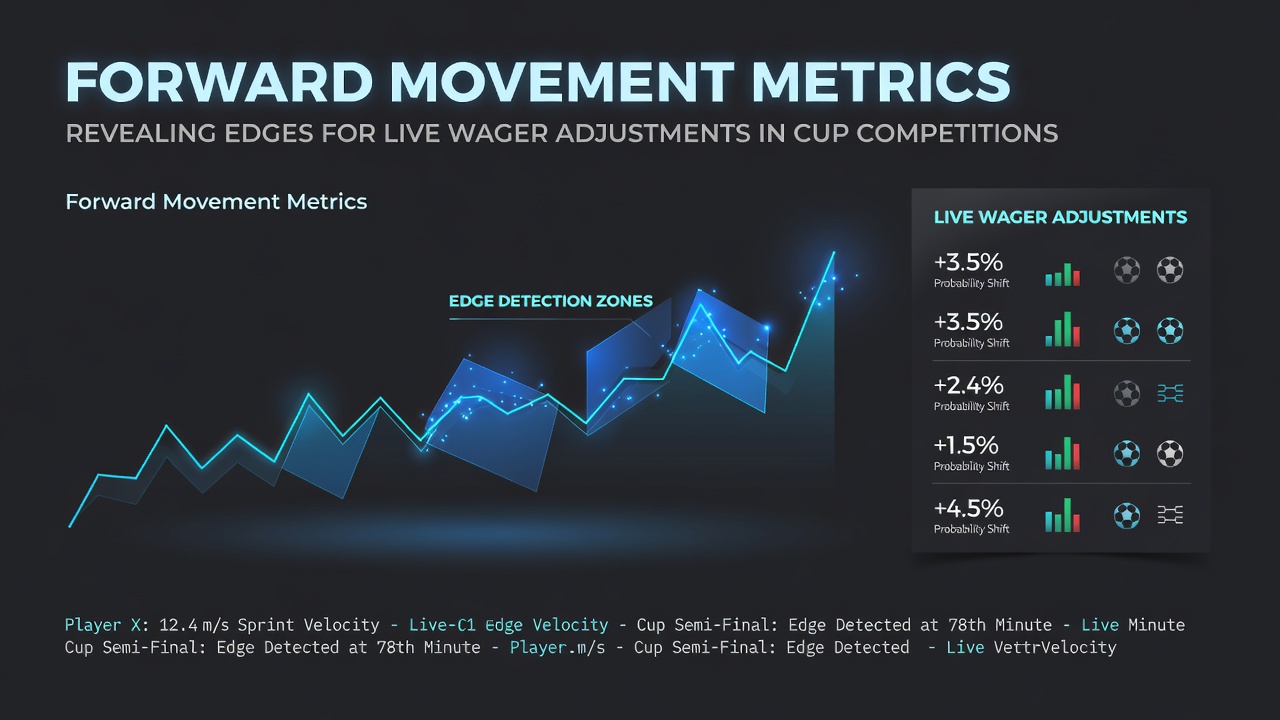
Forward movement metrics track distances covered, progressive runs, and directional changes by attacking players, and these figures provide measurable inputs for live wager adjustments during cup competitions where knockout formats create distinct patterns compared to league play. Data from multiple European tournaments shows that teams increasing forward runs by more than 15 percent in the second half often generate higher scoring probabilities, allowing bettors to shift positions on over/under totals or next-goal markets as matches progress.
Core Components of Forward Movement Tracking
Analysts measure several variables when assessing forward progression, including total meters advanced into the final third, number of carries exceeding 10 meters, and frequency of runs behind defensive lines. These elements combine to form indices that correlate with chance creation, particularly in cup ties where one-off results reward aggressive positioning over sustained possession. Studies from sports analytics firms indicate that forwards averaging above 2.8 progressive runs per 45 minutes correlate with elevated expected goals in elimination rounds, while lower figures align with teams adopting more cautious approaches after early concessions.
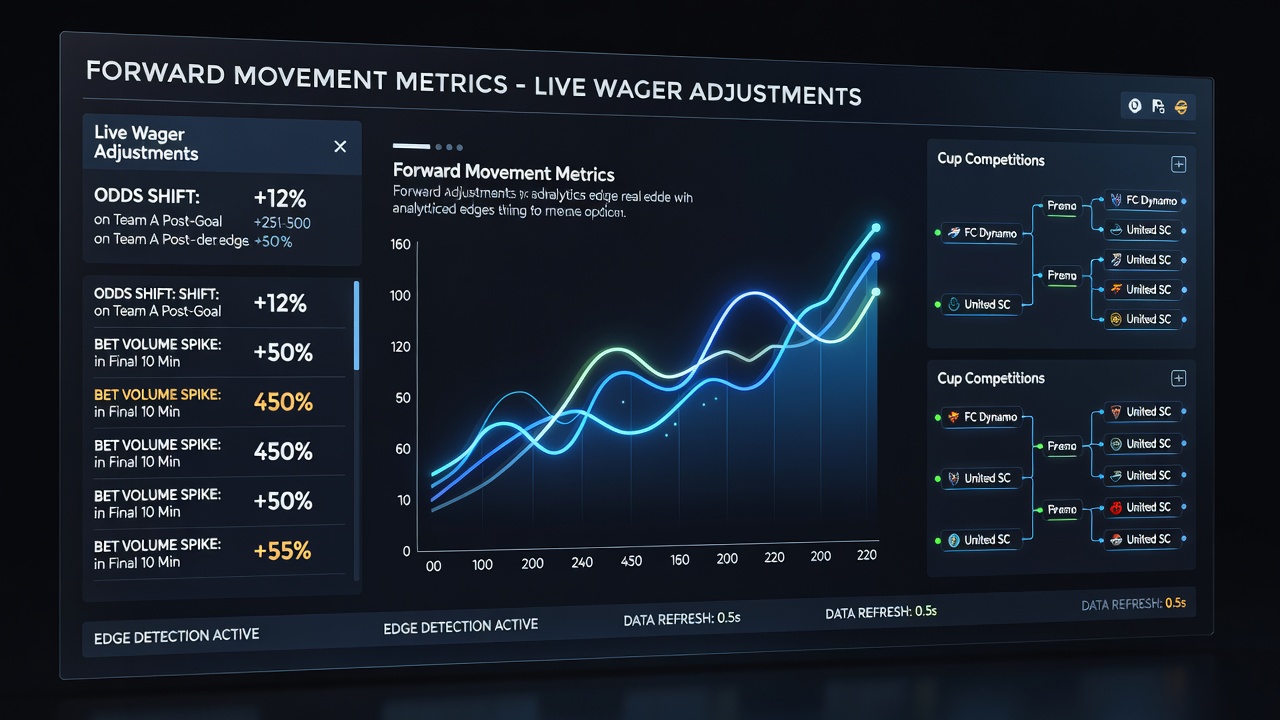
Live platforms now integrate these metrics into dashboards that update every few minutes, enabling adjustments to in-play odds based on real-time positional data rather than static pre-match models. Cup competitions amplify the value of such tracking because substitutions and tactical shifts occur more abruptly, often within the first 60 minutes, compared to the more gradual changes seen across league schedules.
Patterns Observed in Knockout Stages
Observers note that forward movement spikes frequently appear in the 60-to-75-minute window of cup matches, coinciding with periods when trailing sides push higher up the pitch. Records from the 2025-26 season reveal that sides increasing their progressive carry count by at least four in this interval produced 28 percent more shots on target than teams maintaining baseline movement levels. Such shifts inform live bettors monitoring half-time scorelines and total goals markets, prompting earlier entries on overs when movement data accelerates ahead of visible scoreboard changes.
Goalkeepers and central defenders also factor into these calculations because their forward distributions affect transition speed, yet the primary signal remains concentrated on attacking personnel. In July 2026, updated tracking protocols introduced by several top-flight leagues began weighting run angles more heavily, distinguishing between straight-line advances toward goal and diagonal movements that stretch defenses laterally.
Integration With Live Betting Adjustments
Betting operators incorporate forward movement feeds through APIs that flag deviations exceeding one standard deviation from match averages, triggering automatic odds recalibrations on next-goal and both-teams-to-score propositions. Research published by the Australian Sports Commission demonstrates that models using these inputs reduced prediction error rates by 11 percent across sampled knockout fixtures, outperforming possession-based alternatives alone. Bettors who monitor the same feeds can therefore reposition stakes when a side registers sustained forward surges without corresponding shots, anticipating either an imminent breakthrough or a defensive reset.
Penalty shootout markets represent another application because teams that maintained higher forward movement volumes through extra time show improved conversion rates in shootouts, according to aggregated data from UEFA and CONMEBOL events. This connection arises because sustained attacking positioning correlates with psychological momentum entering the decisive phase, although the link remains statistical rather than causal.
Regional Variations and Data Sources
European cup competitions display clearer forward-movement signals than South American equivalents, partly because pitch dimensions and refereeing styles differ across confederations. Figures released by Statistics Canada on international tournament analytics highlight that Canadian clubs competing in CONCACAF events record lower progressive-run totals yet achieve comparable conversion efficiency, suggesting tactical adaptation rather than outright deficiency. These regional differences require bettors to calibrate thresholds separately when adjusting wagers across confederation cups versus domestic knockout paths.
Training data collected from July 2026 onward now includes micro-movements captured by wearable sensors, adding granularity to run-start positions and recovery times between bursts. Such enhancements allow finer live adjustments, particularly in matches extended by video assistant reviews where momentum can dissipate during stoppages.
Conclusion
Forward movement metrics supply objective inputs that support live wager adjustments across cup competitions by quantifying positional aggression and transition speed. As tracking systems continue to evolve, the correlation between these figures and scoring outcomes strengthens, offering consistent reference points for in-play decision frameworks. Observers monitoring multiple competitions simultaneously find value in standardizing metric thresholds while accounting for tournament-specific variables that influence how forward runs translate into goal probabilities.