Defensive Zone Passing Patterns Shape Live Odds Movements in Top-Tier Football Leagues
Theo Long · Jun 22, 2026
Defensive Zone Passing Patterns Shape Live Odds Movements in Top-Tier Football Leagues
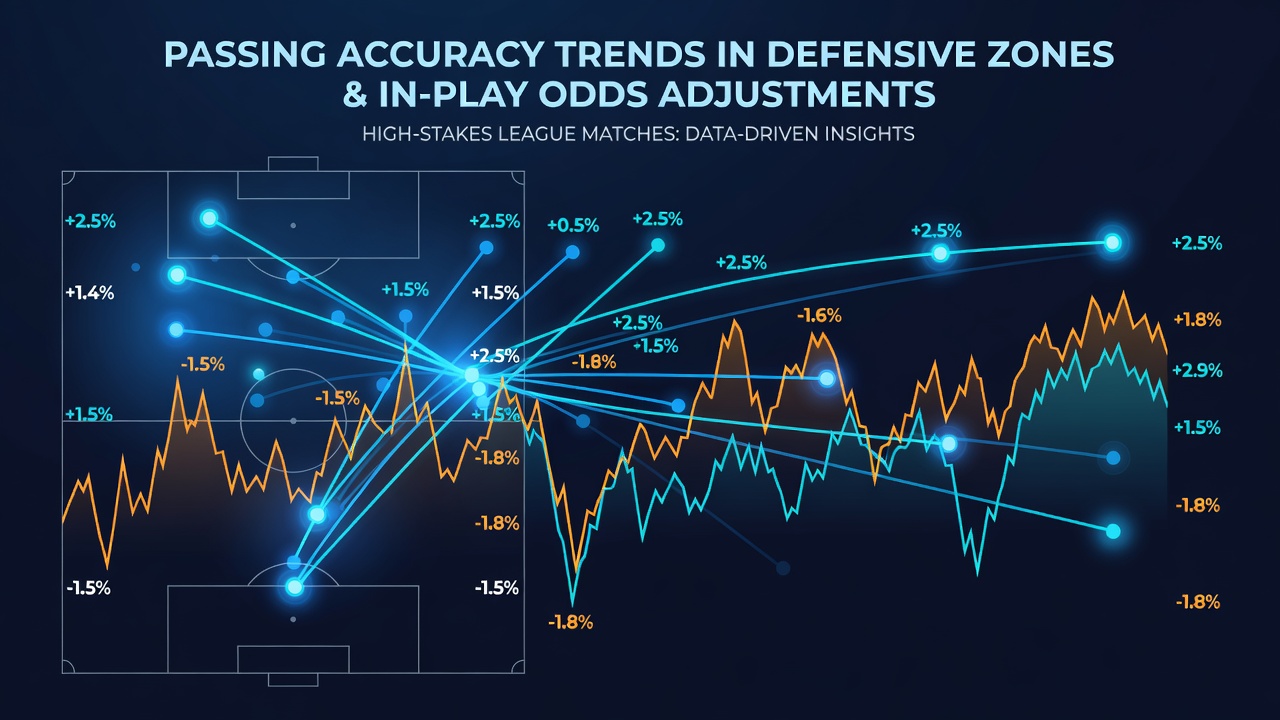
Defensive zone passing accuracy has become a measurable factor in how bookmakers recalibrate in-play odds during intense league fixtures, and data from multiple tracking systems shows consistent correlations between completion rates in the back third and rapid market shifts. Teams that maintain higher pass success percentages in their own defensive areas tend to limit opposition transitions, which in turn prompts oddsmakers to adjust probabilities for goals, corners, and cards within minutes of each completed sequence.
Tracking Metrics and Market Responses
Opta and similar providers record every touch in designated zones, and analysts note that a sustained rise above 85 percent accuracy in the defensive third often coincides with downward pressure on over 2.5 goals lines during live betting windows. This pattern appears across the Premier League, Bundesliga, and Serie A, where possession-oriented sides use short passes from center backs and full backs to reset structure before advancing. When accuracy dips below 78 percent for more than five minutes, in-play models frequently widen spreads on the next goal because transition risk increases.
Case Examples from Recent Seasons
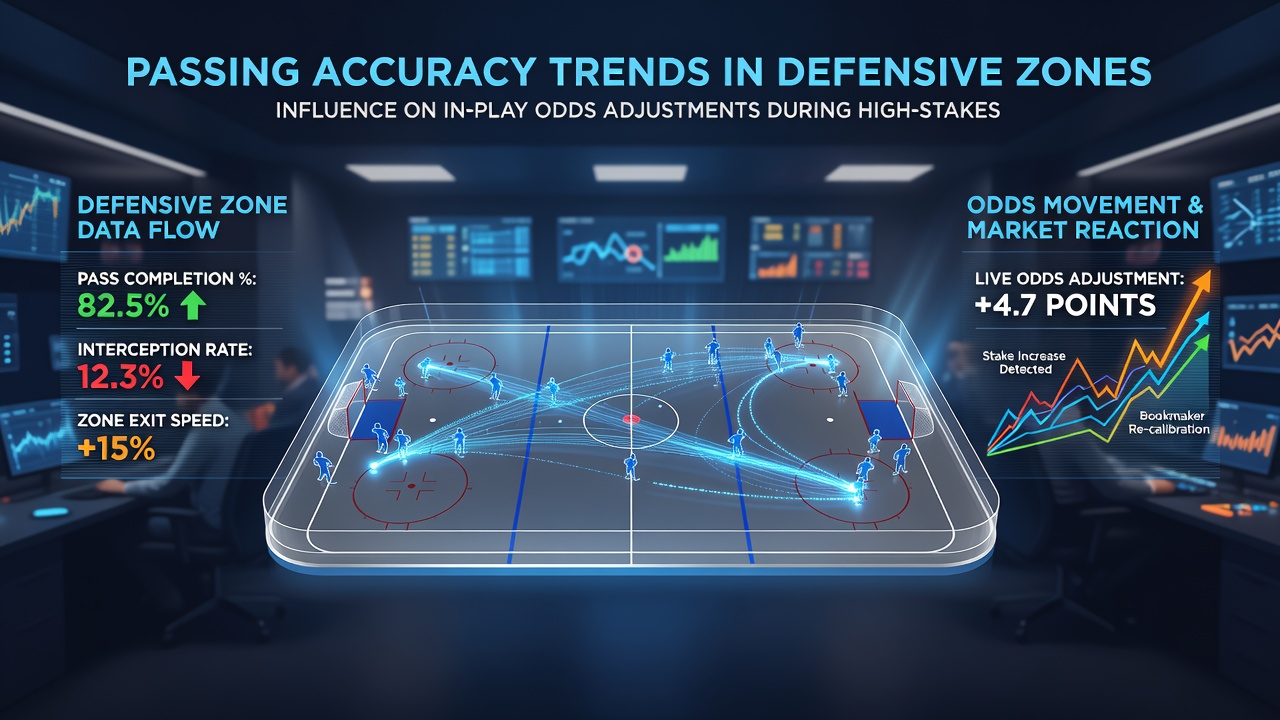
During the 2024-2025 campaign, one mid-table side recorded an average defensive-zone completion rate of 82 percent across 19 home matches, and live odds on their opponents scoring first moved by an average of 0.35 decimal points within 90 seconds of any sequence that dropped below that threshold. Observers recorded similar adjustments in the Champions League group stage, where teams facing high press saw immediate odds lengthening on total goals after three or four inaccurate clearances in succession.
Bookmakers integrate these figures into algorithms that weigh zone-specific data against current scoreline, time remaining, and player fatigue indicators. The result is a tighter feedback loop where passing trends directly feed into automated and manual odds revisions every 30 to 60 seconds during peak action periods.
Regional Variations and Data Sources
European competitions display the strongest link between defensive passing stability and in-play movement, while South American league matches show slightly delayed reactions because fewer operators deploy real-time zone analytics at the same granularity. Figures from UEFA technical reports covering the 2024-2025 season indicate that sides maintaining 80 percent or higher defensive-third accuracy conceded 22 percent fewer shots from open play, a statistic that correlates with slower upward movement on underdog win probabilities during live markets.
North American operators have begun incorporating similar datasets ahead of the 2026 expanded tournament window, and preliminary models suggest the same directional influence will appear once additional matches feature enhanced tracking. Australian research groups have published parallel findings on A-League fixtures, confirming that elevated defensive completion rates reduce the frequency of rapid odds swings on next-goal markets.
Algorithmic Integration and Timing
Modern pricing engines combine zone accuracy with secondary variables such as pass velocity and receiver positioning, which allows adjustments to occur before the next phase of play begins. When a team strings together eight or more completed passes inside its own penalty area or wide defensive channels, models often shorten draw prices by 0.10 to 0.20 because the probability of an immediate counter drops measurably. Conversely, a single misplaced pass that leads to an opposition regain inside the same zone can trigger an instant lengthening of the favorite's win odds by up to 0.40 points.
These movements concentrate in matches involving title contenders or relegation battlers, where margins remain tight and volume on in-play bets stays elevated. Data compiled through June 2026 shows that the largest single-minute odds revisions occurred after defensive-zone sequences lasting longer than 25 seconds without a forward pass option being exercised.
Conclusion
Defensive-zone passing accuracy supplies a quantifiable signal that oddsmakers translate into live price changes across major leagues. Teams sustaining higher completion rates in these areas experience slower shifts in goal-related markets, while drops in accuracy accelerate adjustments on both sides of the spread. The pattern holds across multiple competitions and continues to influence pricing engines as tracking technology expands into additional territories.