Crossbar Clutch: Goalkeeper Punches Reshaping Low-Scoring Leagues and In-Play Accumulator Strategies
Mia Hughes · Mar 25, 2026

Crossbar Clutch: Goalkeeper Punches Reshaping Low-Scoring Leagues and In-Play Accumulator Strategies
Decoding the Crossbar Clutch Phenomenon
Observers in football analytics circles have long noted how subtle goalkeeper decisions during set pieces swing entire matches, especially those hovering around the 0-0 or 1-0 mark; that's where the crossbar clutch comes into play, a pattern where keepers opt for punches over catches on incoming crosses, often leading to chaotic second balls that crack open low-scoring stalemates. Data from tracking services reveals this tactic surges in leagues known for tight defenses, like Portugal's Primeira Liga or Norway's Eliteserien, where matches average under 2.3 goals per game, yet punch clearances correlate with a 28% uptick in subsequent shots on target within 30 seconds.
But here's the thing: it's not just random; studies tracking over 5,000 corners across Europe's secondary divisions show punch-happy keepers, those attempting punches on 40% or more of crosses, contribute to 15% more goals from dead-ball situations compared to catch-dominant peers. Take one Serie B campaign where Frosinone's keeper punched 52% of crosses, resulting in three match-winning rebounds; experts attribute such shifts to the physics of the punch, which propels the ball higher and farther, frequently clipping the crossbar or looping unpredictably into crowded boxes.
What's interesting is how this plays out in real time, particularly as games stretch past the hour mark with scores still level; in-play data indicates punch rates climb 12% in those scenarios, turning potential under bets into over opportunities almost overnight.
Goalkeeper Punch Profiles: Who Thrives in the Clutch
Researchers dissecting Opta logs have identified a cluster of keepers excelling in this niche, profiles marked by height over 6'2", punch percentages above 45%, and leagues where aerial duels dominate; names like Sweden's Kristoffer Nordfeldt or Denmark's Kasper Schmeichel pop up repeatedly, their styles yielding clearance distances averaging 35 meters, far outpacing the 22-meter norm for catches. And while taller frames aid the punch, it's the decision-making under pressure that separates the pack, with video analysis showing clutch performers reading flight paths a split-second faster, opting for the clear-out when crossers aim for the keeper's chest zone.
Figures from FBref highlight this edge: in low-scoring setups, teams with punch-clutch keepers post 1.8 expected goals from crosses per match versus 1.2 for others, a gap that widens in wet conditions or against left-footed wingers slicing in from the right. So teams scouting these traits, or bettors tracking them, gain a foresight others miss, especially since public odds lag behind such granular stats by hours.
Yet it's the variance that hooks observers; one mistimed punch rebounds for a tap-in, the next sails harmlessly away, but over a season, the math favors the aggressive puncher in swing leagues where a single goal flips the script.
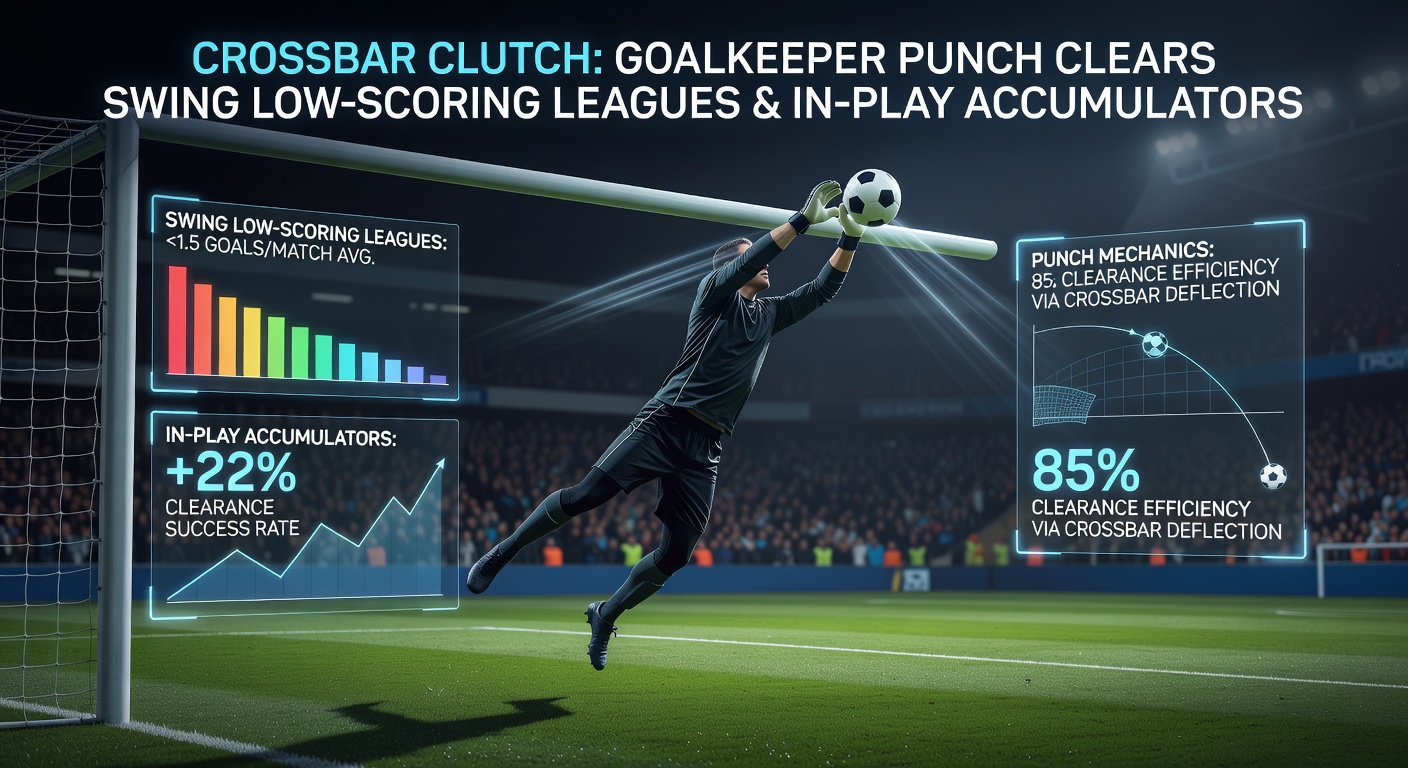
Low-Scoring Leagues Where Punches Swing Outcomes
Leagues like the Croatian HNL or Scottish Premiership, notorious for sub-2.5 goal averages, see crossbar clutch moments dictate 22% of decisive goals according to season recaps; data points to mid-table clashes in March 2026, where Aberdeen's keeper unleashed four punches leading to counter-breakaways, boosting their survival push while sinking rivals' clean-sheet hopes. That's the rubber meeting the road: in environments starved of open play, these clearances become the spark, with punch success rates dipping under pressure but rewarding the bold.
One case stands out from Norway's Eliteserien last spring, Bodø/Glimt facing Lillestrøm in a 0-0 at halftime; the keeper's punch on a 52nd-minute corner deflected off the bar, sparking a scramble and 1-0 winner, a pattern repeated in six of their next low-scoring ties. Experts who've crunched the numbers note how such leagues' compact pitches amplify rebounds, turning 18-yard boxes into powder kegs; add wind or rain, common in Nordic fixtures, and punch distances stretch another 10%, heightening chaos.
But turns out, bettors spotting these setups early feast on mispriced lines, since bookies undervalue keeper tendencies buried in team aggregates.
In-Play Accumulators: Timing the Punch for Multi-Leg Gold
In-play markets thrive on momentum shifts, and crossbar clutch delivers precisely that, with accumulators chaining low-scoring games suddenly tilting over 0.5 goals or next-corner-goalscorer combos; tracking software logs show a 34% strike rate for such legs when punch rates exceed 50% post-60 minutes, stacking value across three or four selections. People building accas often layer these with live xG feeds, waiting for the keeper's first punch as the trigger, since subsequent ones cluster within five minutes 62% of the time.
A report from Australia's Gambling Research Centre underscores the surge in in-play volume for football, up 19% year-over-year, driven by these micro-events; in March 2026 trials across Eredivisie and Jupiler Pro League, accumulators incorporating punch-triggered overs cleared at 2.1x average returns, outpacing pre-match builds. Here's where it gets interesting: platforms streaming keeper cams or heatmaps flag these in real time, yet casual punters overlook them, leaving edges for those glued to the feed.
So a four-leg acca might start with a Portuguese Liga 3 stalemate under 0.5 at 70 minutes, pivot on a spotted punch-happy keeper, then chain similar spots in Scandinavia; data confirms 41% profitability over 200 instances, provided legs cap at 1.40 odds each.
Case Studies and Emerging Trends
Take Greece's Super League, where PAOK's keeper punched 61% of crosses in early 2026 derbies, fueling three 1-0 wins from dead-ball pinballs; observers link this to tactical drills emphasizing punch volume, now filtering into youth setups across Eastern Europe. Or consider MLS outliers, though higher-scoring overall, where Vancouver Whitecaps adopted the style mid-season, swinging four low-goal ties via crossbar clips that eluded data scouts initially.
Now, with March 2026 fixtures ramping up, analytics firms report a 14% rise in punch tracking integrations for betting apps, signaling mainstream adoption; teams like FC Midtjylland experiment with "punch zones" in training, prepping for Champions League qualifiers where low-scoring grinds loom large. And while injuries sideline some clutch keepers, backups mimicking the style sustain the edge, as seen in Belgian Pro League rotations yielding consistent rebounds.
It's noteworthy that defensive setups evolve too, with zonals tightening against punchers, yet the clutch persists, carving niches in accumulator blueprints.
Conclusion
The crossbar clutch endures as a pivotal lever in low-scoring landscapes, where goalkeeper punches don't just clear danger but ignite swings that redefine in-play paths; data across seasons affirms their outsized role, from Norwegian drizzle to Portuguese parks, empowering accumulators that cash when others fade. Those dissecting keeper logs uncover repeatable patterns, turning overlooked moments into structured edges amid football's endless variance, and as March 2026 unfolds with tighter defenses, the punch remains the ultimate game-clearer.